The wedding details you choose will appear in more than close-up photographs. Your ceremony backdrop frames the vows, table arrangements sit between guests during speeches, and reception lighting shapes the atmosphere long after sunset. Planning these elements together helps the whole day feel considered.
For a Brisbane wedding, start with the venue, the light and the practicalities of being outdoors. Then choose décor that suits the setting and leaves room for people to enjoy it. Here is how to bring those decisions together.
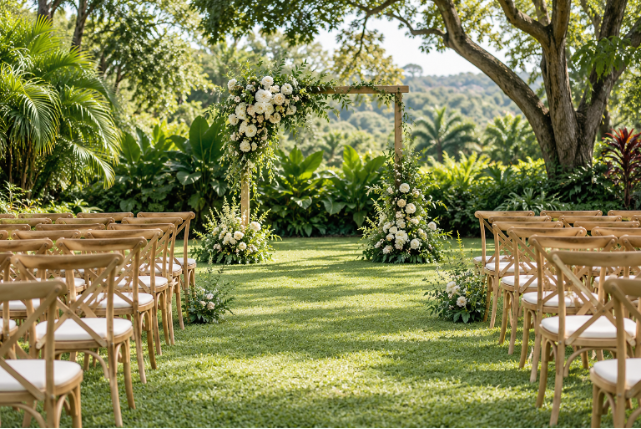
AI-generated illustration of a garden ceremony styling concept.
Start with the venue and the light
Visit your venue at roughly the time you expect to hold the ceremony. Stand where you will exchange vows and look in both directions. Where will the sun fall? Will either of you be squinting? Are there bins, car parks or busy walkways behind the ceremony space?
Ask your photographer to help assess the position before the layout is locked in. A small change in the direction of the chairs or the location of an arbour may improve the background without adding anything to the styling budget.
Indoors, check window light, overhead fittings and the colours already in the room. Timber floors, dark walls and patterned carpets all influence how your palette feels.
Choose a palette that belongs in the space
Build your colour scheme around the venue rather than treating it as a blank canvas. Soft neutrals and foliage can sit comfortably in a garden; stronger colours may suit a room with a distinctive interior.
Order fabric and stationery samples before committing. Put them beside your flowers or foliage choices and photograph them together in daylight. Similar whites can look noticeably different when placed side by side.
Use texture to add interest: linen, glass, ceramic and flowers can give a restrained palette depth. Check shiny surfaces from different angles, especially mirrored signs that may reflect distracting parts of the room.
Give the ceremony a clear focal point
Choose the element you most want to frame the ceremony, such as a floral arbour, a pair of arrangements or an existing architectural feature. Leave enough space around it for both of you, your celebrant and the wedding party to stand comfortably.
Walk the aisle with the proposed décor positions marked out. Arrangements should leave a clear route for dresses, mobility aids and the photographer. Check the view from seated eye level, too.
For a Council park, review Brisbane City Council’s park-booking requirements early. Exclusive use requires a booking application, which asks for setup and pack-down times, equipment and temporary structures. Confirm what your chosen site permits before hiring an installation.
Make weather planning part of the design
Brisbane’s warmer months are generally wetter than its winter months, as shown in the Bureau of Meteorology’s Brisbane climate records. Those averages can help with early planning, but they cannot predict your wedding day.
Choose a wet-weather ceremony location and work out which styling pieces can move there. Confirm who makes the weather decision, when it happens and who handles the changeover. Ask suppliers how freestanding signs, arrangements and structures will be secured safely.
Plan for guest comfort as well. Check the Bureau’s UV guidance and local forecast when organising shade and sun protection. Cool or cloudy weather does not remove the possibility of sunburn. Keep drinking water easy to find and avoid leaving guests waiting in an exposed ceremony area.
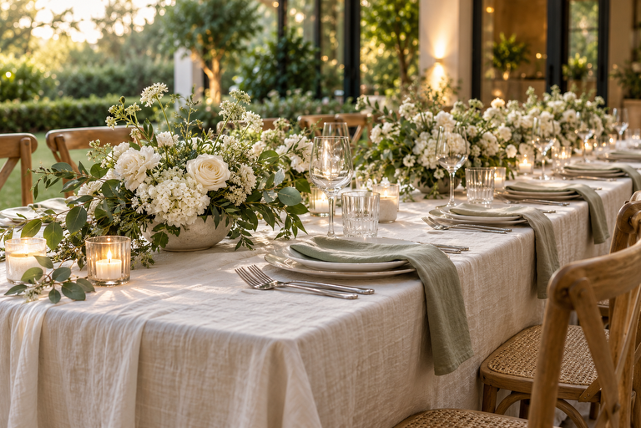
AI-generated illustration of a reception table styling concept.
Style tables for conversation as well as photographs
A table should work once dinner is served. Before ordering centrepieces, test one complete setting with the plates, glassware, napkins, menus and any shared dishes you expect to use.
Sit opposite someone and check whether you can see each other comfortably. Low arrangements are a straightforward option; taller designs need careful positioning so their stems and bases do not obstruct faces.
Leave space for guests to set down a drink without moving décor. Check that table numbers are readable from the entrance and that candles, if permitted, have suitable holders and clearance from flowers and fabric.
Ask for a photograph of the trial setting from seated height and from across the room. Both views matter, and they can reveal clutter that is easy to miss when you are standing over the table.
Check the reception lighting before the day
Fairy lights and candles can create atmosphere, but ask what will illuminate people during speeches, dinner and the first dance. A room can look lovely to the eye while leaving faces in deep shadow.
Discuss the lighting plan with the venue and photographer, particularly if coloured uplighting or a DJ lighting rig is involved. Consider keeping coloured effects away from faces during speeches, then changing the mood for dancing.
If possible, view the reception space after dark. Confirm who controls the lights and when each setting will be used.
Bring your stylist and photographer into the same plan
Share a simple mood board, floor plan and run sheet with your suppliers. Include the ceremony position, reception layout, wet-weather alternative and the time each space will be fully set up.
When reviewing wedding photography by Joy Philippe, consider how you would like the setting and details to sit alongside photographs of the people. Share a short list of meaningful items, such as a family heirloom or handmade place cards, so they can be considered in the photography plan.
Allow a clear window for photographs of the completed reception before guests enter. If ceremony flowers will be reused, name the person moving them and confirm where they will go. Avoid a changeover that depends on everyone being available at once.
Spend on the details you will actually notice
Prioritise the areas that appear repeatedly throughout the day: the ceremony backdrop, guest tables and the space behind the speeches. One well-resolved feature can have more impact than decorations spread thinly across every corner.
Before signing off, check:
- The ceremony position and seated sightlines
- Venue permissions and safe installation requirements
- A complete table setting with room for food and drinks
- The wet-weather layout and changeover responsibilities
- Reception lighting and time for detail photographs
Beautiful wedding décor supports the celebration as it happens. When the space is comfortable, the light is considered and the setup runs smoothly, the photographs can capture both the choices you made and the people you made them for.